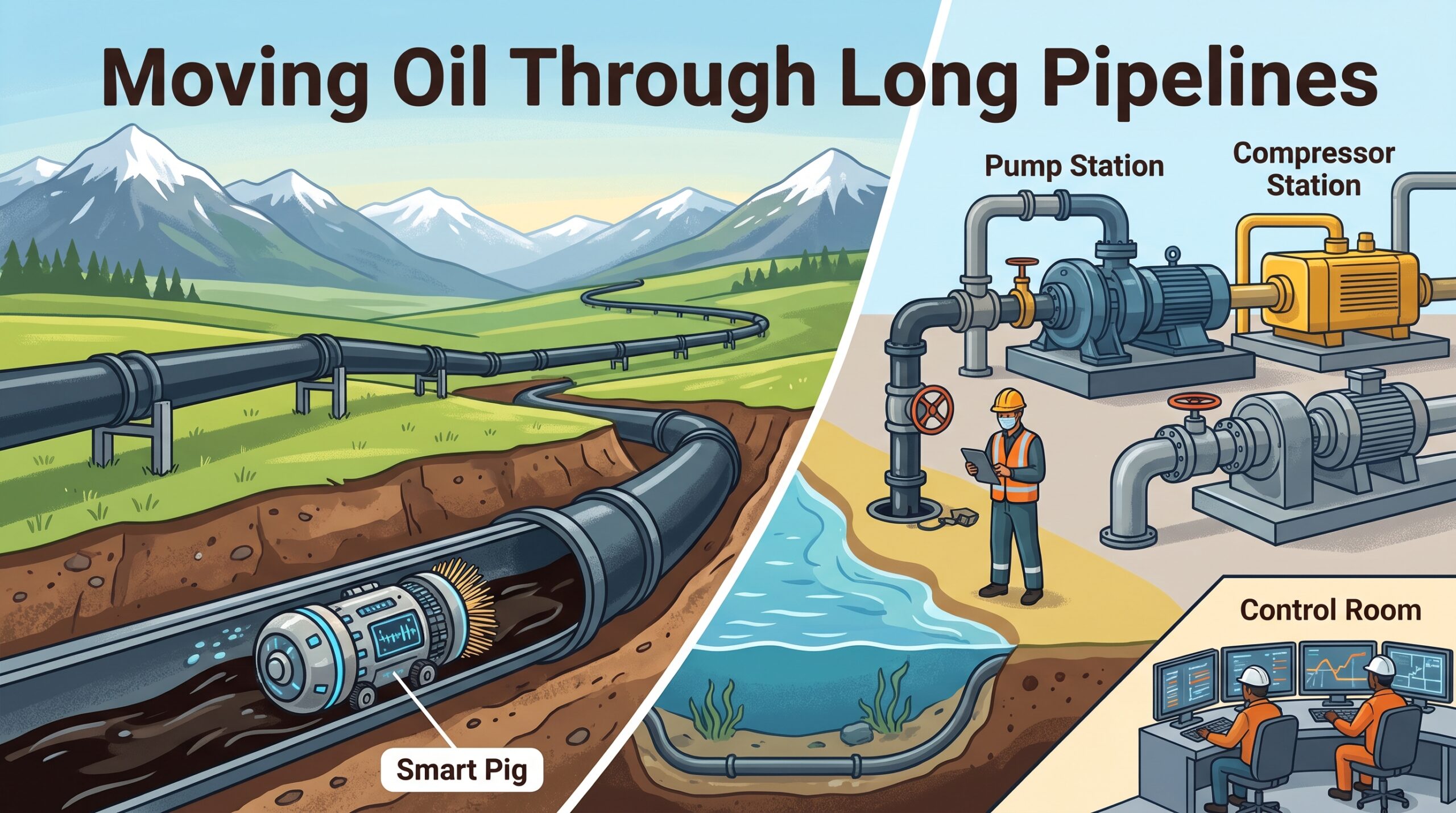
Pipelines are long, strong tubes made of thick steel that transport liquids and gases across vast distances. They are the safest and most efficient way to move millions of barrels of oil and cubic meters of gas every day. Pipelines run across green fields, dry deserts, cold mountains, and even along the ocean floor. Most land pipelines are buried deep underground, which keeps them safe from bad weather and vehicle accidents.
Inside the pipe, powerful pump stations push the oil forward at a steady pace. Compressor stations do the same job for natural gas by keeping the pressure high. The fuel travels quietly day and night without causing heavy traffic on highways. This makes pipelines much safer and cleaner than using thousands of tanker trucks on city roads.
Engineers inspect pipelines regularly to stop leaks before they happen. They use high-tech inspection machines called “smart pigs.” A smart pig travels inside the pipe to check the metal walls for rust, cracks, or dents. At the same time, teams in central control rooms watch computer screens twenty-four hours a day to make sure the pressure remains normal everywhere along the route.